![[Translate to English:] UNIMAT PowerLine Übersicht mit Anwendungsbeispielen und Funktionen](/fileadmin/_processed_/a/c/csm_4er_PL_web_4abcb366ff.jpg)
Unimat PowerLine - Vocational training
160300
The UNIMAT PowerLine brings real workshop performance into the classroom — compact, modular and practice-oriented. With one single system, students can assemble up to ten different machines and gain hands-on experience with the fundamental processes of metalworking and woodworking in the environments where these skills matter most: training workshops, career orientation programmes and technical education.
Designed for students aged 14 and above, and for supervised use in vocational training and schools.
Workshop Performance for Real Technical Training
The PowerLine is the high-performance expansion stage of the UNIMAT system. While the child-safe MetalLine set, suitable from age 12, covers the technical foundation level, the PowerLine goes one step further: more motor power, more torque and the ability to work with larger workpieces.
This also means that the PowerLine is intentionally not a toy. It is used under supervision and after proper instruction — just like a real machine in a professional workshop. Students experience responsible machine operation under realistic conditions and are prepared for the requirements of technical training, without the need to invest in a complete machine park.
10 Machines from One System
One Kit, Ten Machines — Reconfiguration as Part of the Learning Process
The modular design is the didactic core of the system. Using the same drive unit and only a few additional components, students can build up to ten different machine variants — from a lathe and circular saw to a handheld drill.
The quick conversion between machine variants is not just a practical feature; it is part of the learning process. Students who configure, align and commission a machine themselves gain a deeper understanding of its structure, function and operating principles.
In a compact space, the PowerLine creates a fully functional training workshop in miniature — maintainable, expandable and designed for many years of educational use.
Test which job is the right for your students
Career orientation works best when it is hands-on. The ten machine variants give young people a realistic impression of how different technical professions work — and help them discover their own interests and strengths.
| Machine variants | Professional fields & vocational training pathways |
|---|---|
| Lathe, horizontal and vertical milling machine, face milling machine | Machining and metal technology, mechanical engineering, precision engineering |
| Circular saw, jig saw, wood lathe | Wood technology, carpentry, model making |
| Sanding machine, hand sander | Surface finishing, tool maintenance, metal construction |
| Hand drill, vertical drilling | General manufacturing, assembly, precision mechanics |
This turns a lesson into an experience that makes career profiles tangible — without the need for a company visit.
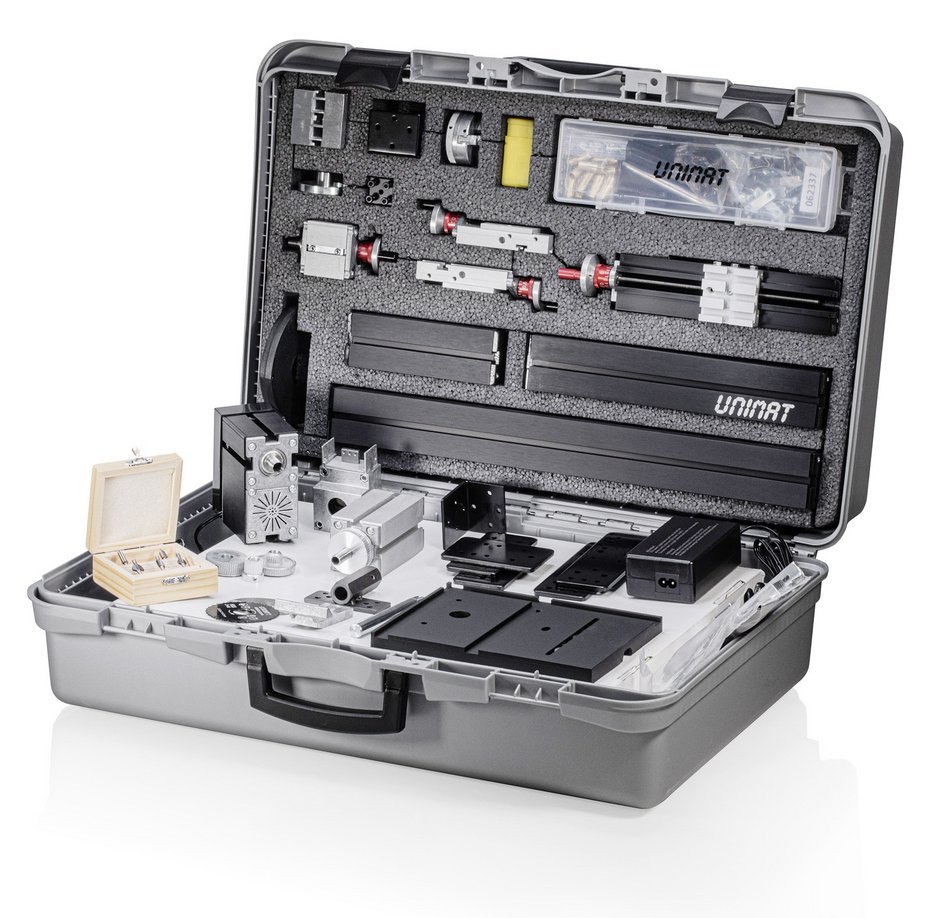
🔧 Modular system for maximum flexibility
For anyone who needs a versatile machine workshop in a compact space, the PowerLine system is the ideal solution.
Thanks to its intelligent modular design, a single system can be configured into up to 10 different machine variants — from a sanding machine to a circular saw.
Fast and easy conversion between the different setups provides maximum flexibility, making PowerLine perfect for workshops, technical training and ambitious creative projects at home.
Responsibility from the Start
The PowerLine offers significantly more power than the child-safe basic system. It is therefore designed for students aged 14 and above and must always be used under supervision and after proper safety instruction.
This is intentional: learning how to handle a powerful machine responsibly and under guidance is an essential part of technical education. Students learn how to use protective equipment, secure workpieces correctly and work safely — just as they will be expected to do later in a professional workshop.
A variable power transformer (Art. 161 410) is recommended for all PowerLine applications.
What Students Take Away
Students gain practical experience with fundamental metalworking and woodworking processes on real machines.
- They learn how to configure, align and commission machines themselves.
- They transfer technical drawings and dimensions into finished workpieces.
- They develop precision, care and a strong awareness of safety.
- They discover their own interests and strengths for future career choices.